
A Big Year is the final boss of birdwatching–it’s when you see as many birds as you can in a year. There are countless books and even a movie (with Jack Black!!!!!!) about this insane endeavor. The quest takes massive amounts of planning and money and seems fun if you’re That Kind of Person, which I am. When I #lostmyjob, my initial thought was that I should get out of my lease and do a birding Big Year. Tragically I thought about the cost for longer than 10 minutes and realized that was beyond impossible. Even a California Big Year would be difficult and expensive. So, I decided to limit the area even further. A birding Big Day is a quest to see how many birds you can see in a 24 hour period in a given location. For my Big Day, I decided to bird in Alameda County, where I live.
Buckle up, bitches, this is going to be a LONG one!
Planning: In the weeks leading up to my Big Day, I devised a plan to hit as many hot spots as possible at the prime times to do so. First, I researched the top hotspots on eBird.
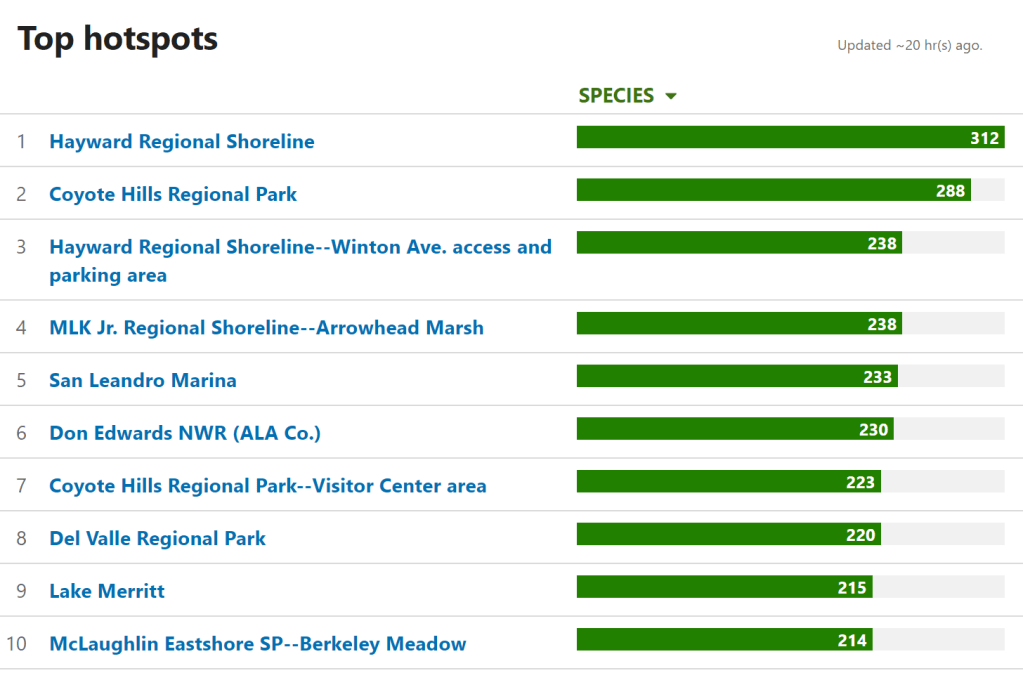
Next, I narrowed them down slightly to lessen drive time. Coyote Hills, for example, is too far away from other hot spots I was interested in. I also didn’t want to waste much of the day driving, because no. So, I limited myself mostly to Oakland and Berkeley. After the narrowing down phase, I then decided to remove overly redundant habitats, where I would not see many New To The Day Birds (N2TDBs). This meant not too many shorelines and including a forested area (even though it was much lower on the hotspot list). In the end, I settled on: Hayward Regional Shoreline, MLK Jr. Regional Shoreline, Lake Merritt, Cesar Chavez Park, Albany Bulb, San Leandro Marina, and Redwood Regional Park. After this is where it got tricky. As I have mentioned in previous posts, birds have a pretty strict siesta time (around 11-3). Another factor I had to consider was tides. Incoming tides bring shorebirds in, and then shorebirds typically roost during high tides. Marsh birds, though, are easiest to spot during high tide. Birds in general go dummy mostly around sunrise and sunset. Because of this, I had to build a complicated schedule, that I’m not sure was even very good. I settled on this:
- Redwood Regional Park leading up to the sunrise (7:13 am) and for the first 30 min or so after the sunrise.
- MLK Jr. Regional Shoreline for the lead up to high tide (8:37 am) and for a little bit after.
- Hayward Regional Shoreline for the outgoing tide, after my time at MLK (not ideal, but whatever).
- San Leandro Marina afterwards even though this would probably be during the dead time.
- A break at my apartment, to eat, etc. pending timing.
- Lake Merritt for late afternoon, since I reliably see some birds at this time.
- Either Cesar Chavez Park, Berkeley Marina, or Albany Bulb for the time leading up to sunset at 5:55 pm, and slightly after.
Even reading this was alarming. How the fuck does anyone plan a Big Year?? Nevertheless, I persisted. I got some non-birding things in order as well: packing lots of snacks, coffee, sunscreen, and water, picking a terrible outfit with layers including my godawful binoc/camera harness, and bringing many accoutrements (lens cleaner, klonopin because you never know, etc.). The evening before, I zonked myself early so that I could wake up around 5:30 am–ew.
Quick aside–some people plan target species list on a Big Day to stay on task, or set a certain amount of birds they hope to see. I did not do that because I feared it would set me up for failure, which right now I cannot psychologically handle. So, I left just hoping I would see more than 20 birds.
The morning of I woke up with a migraine and it was 37°. I thought about cancelling but, lo, I did not! I took a pill, drank Pepto Bismol directly from the bottle, put on a chartreuse fleece detachable hood, and headed out.
Redwood Regional Park
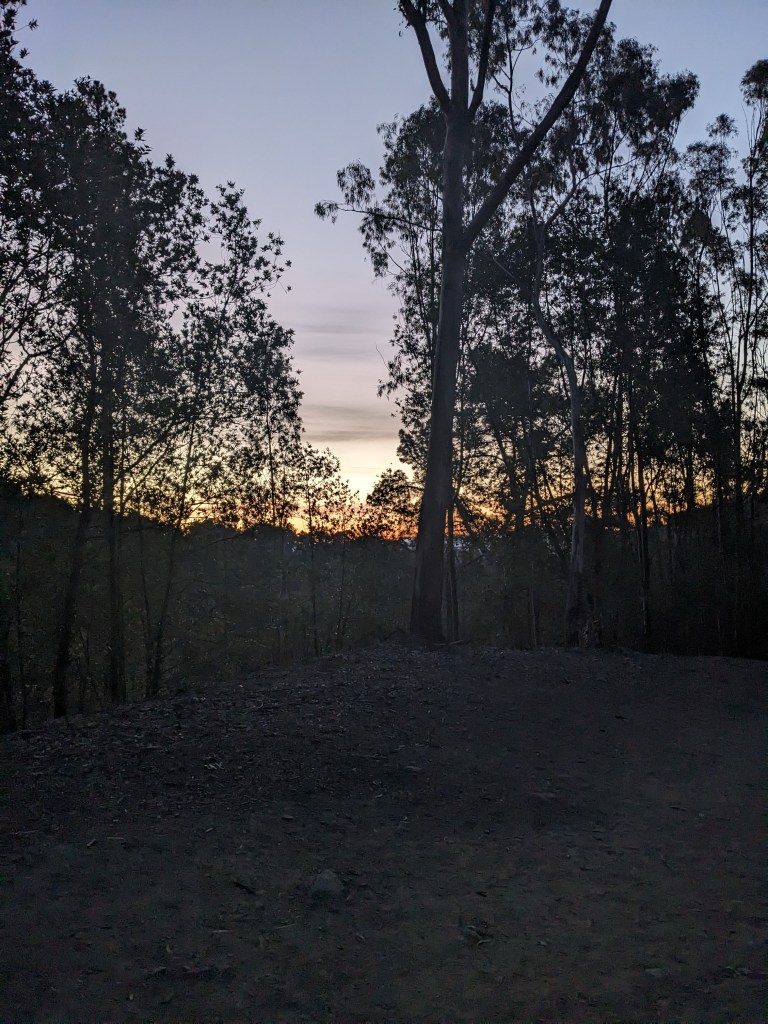
Shockingly close to Oakland (10 min from where I live), Redwood Regional Park contains the largest remaining group of coast redwood found in the East Bay. The park is stunning and features several trails. My usual, and the one I planned to take today, is the Stream Trail. It’s a 5.8 mile out-and-back that runs along a stream. I absolutely did not do the full trail, because time was obviously very of the essence on this day. I arrived around 6:48 am, thinking I didn’t want to spend too much time in total darkness before sunrise. This was mistake #1 (more on What I Learned at the end of the post). Immediately I heard many birds singing, including the clear hooting of two Great Horned Owls! Although I didn’t get to see them, I love owls so hearing this was amazing. Because of the types of birds active in the early morning in this area (Tiny Birds who are very chatty but also Tiny and Speedy and High Up In Trees) and the low light, I was birding mostly by ear here. This is a very weak suit for me, so I relied heavily on Merlin and there were many bird songs I had to leave unidentified. I was so overwhelmed by the amount of birdsong and Tiny Birds flitting about that I barely made it to the stream after around an hour before realizing I was going to be late to my next stop. All in all, I identified 16 birds here, 5 by ear. The highlights were the GHOs and a Red-tailed Hawk doing her signature scream. I also saw one N2MB, a Fox Sparrow!
MLK Jr. Regional Shoreline
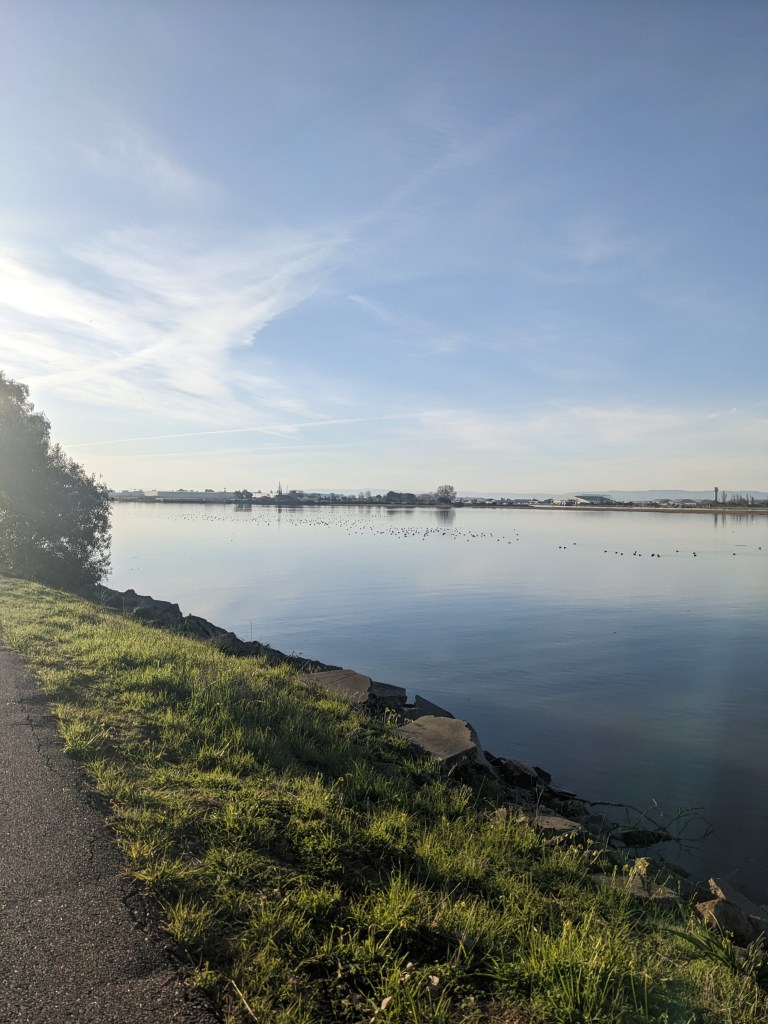
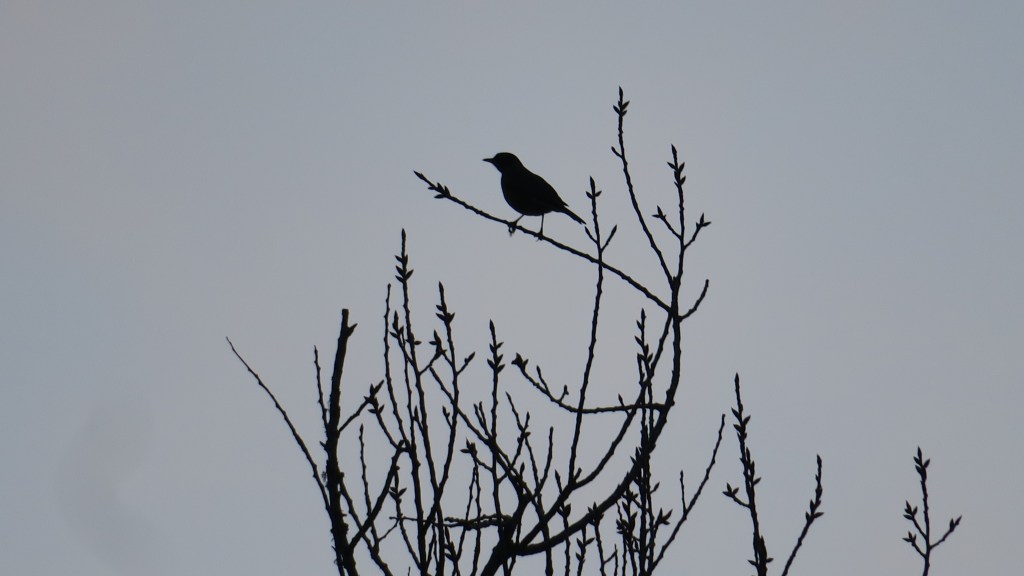
This is my most-frequented birding zone in the East Bay, mostly because it’s close to my house and I have seen baby ducks here. It’s very close to the airport, so you can see planes take off and land, if that’s your thing (not mine) and you can see part of the shoreline from the airport, if birding from indoors in an airport is your thing (mine). It opens at 8 am, and I arrived around exactly at that time from my usual parking lot at the Damon Marsh Trail. I walked to Arrowhead Marsh, seeing many birds along the way! I spent about an hour total. One important take away I had from this area was that a Song Sparrow has one of the most beautiful songs (I guess I’m an idiot from not realizing this by the name). I saw Ruddy Ducks in the hundreds as well as the notoriously difficult to differentiate Lesser Scaup (they prefer freshwater and Greater Scaups typically prefer saltwater).
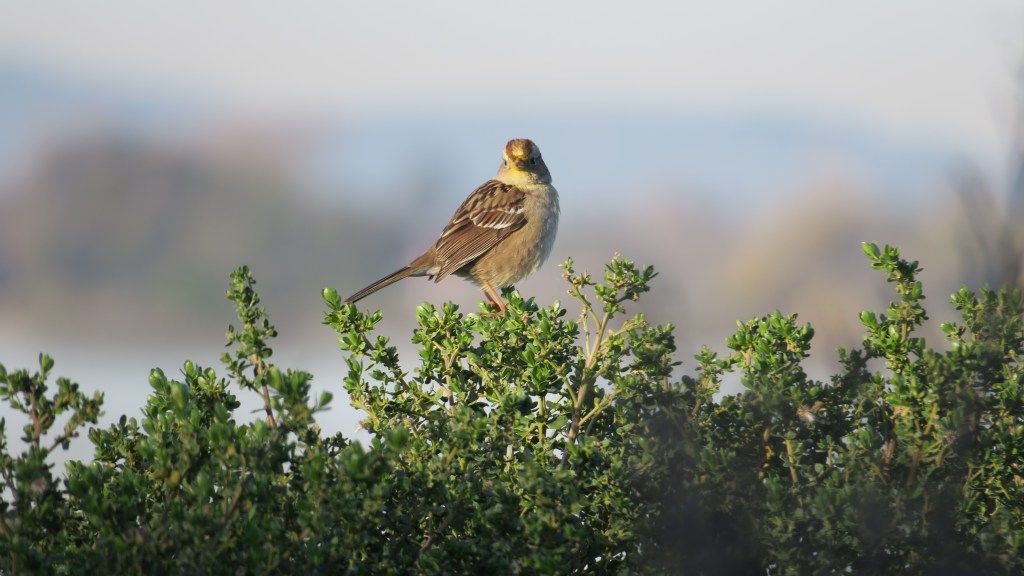
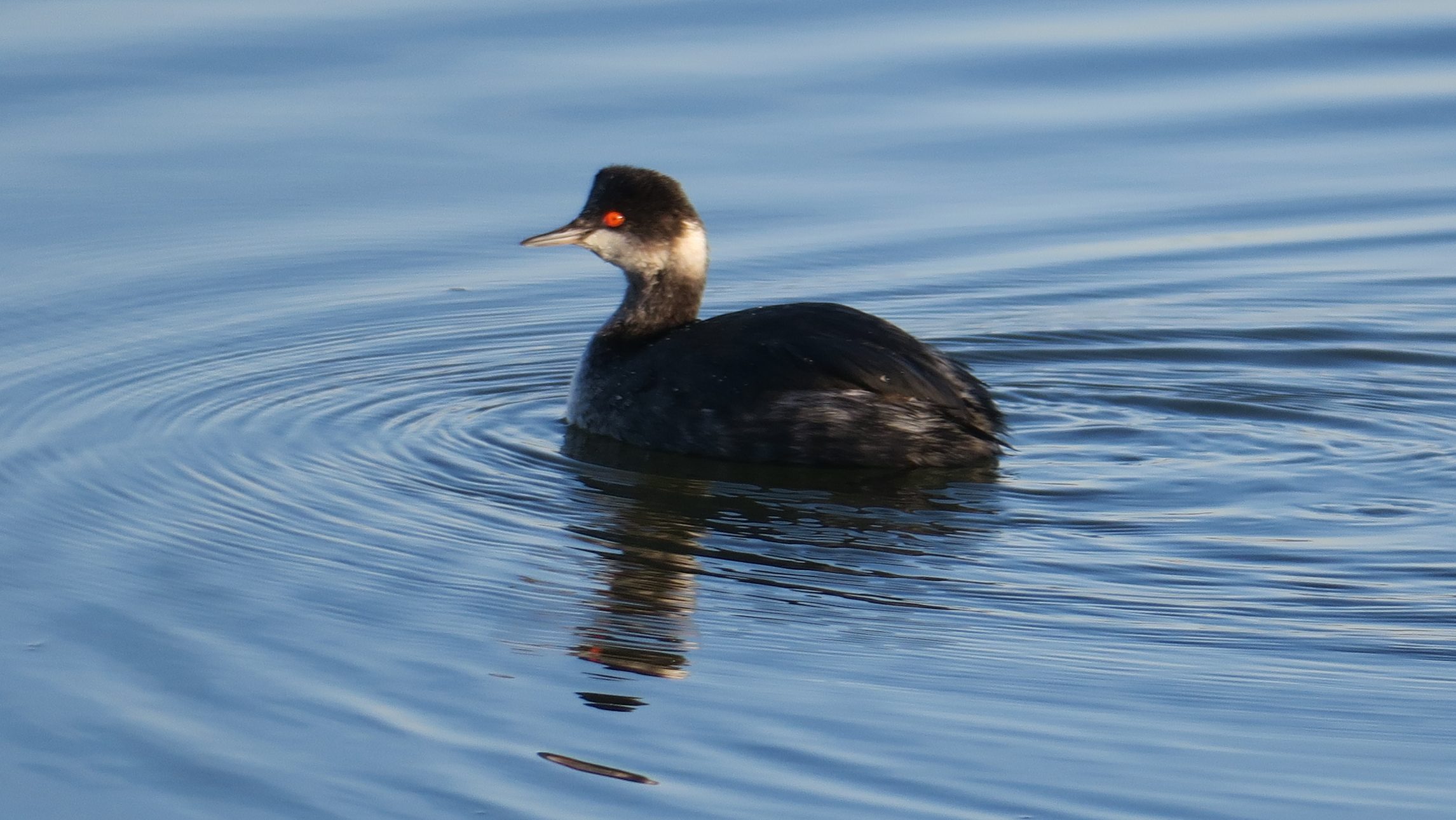
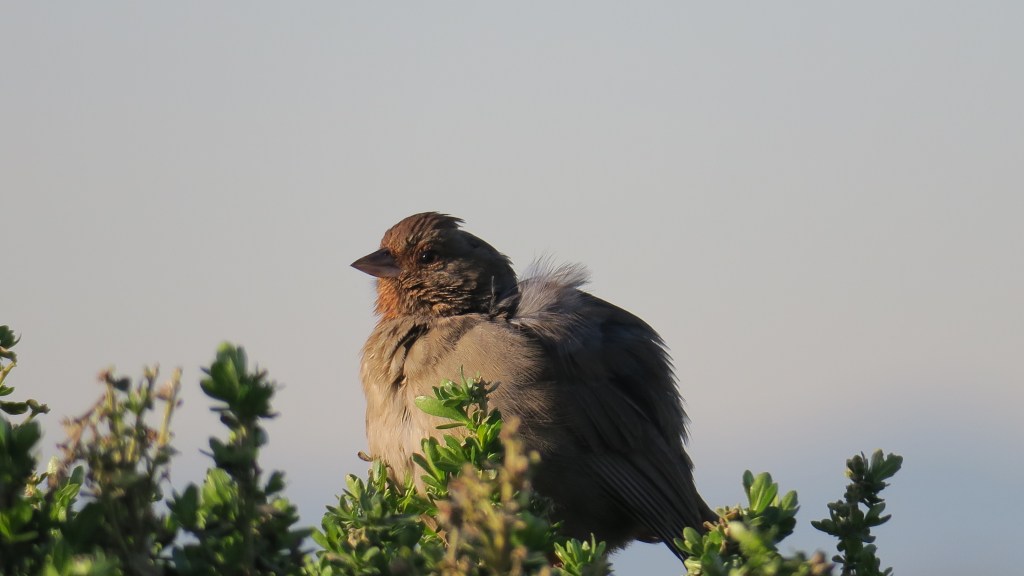
What I saw next was something I could never have expected: Brant. I found a flock of Canada Geese and decided to do a quick scan to see if I could find a Cackling Goose (as you may remember, they are a Canada Goose’s mini version). Instead, I spotted a lone Brant. Brant (it sounds so much like a name I’m using it as one) is a small and compact goose who is rarely in the Bay Area in winter. I first saw him in Olympic National Park a few years ago. At this point, I committed the biggest rookie error in the book–I spent like 15 minutes looking at Brant. This was absolutely worth it, though, because LOOK AT HIM with his little smile!! I love him!!! Although he isn’t supposed to be here, he was clearly welcome in the flock of Canada Geese and, I later read on eBird, has been with them for some time. If you’re in the Bay, definitely head over to spot him near the Arrowhead Marsh parking lot.
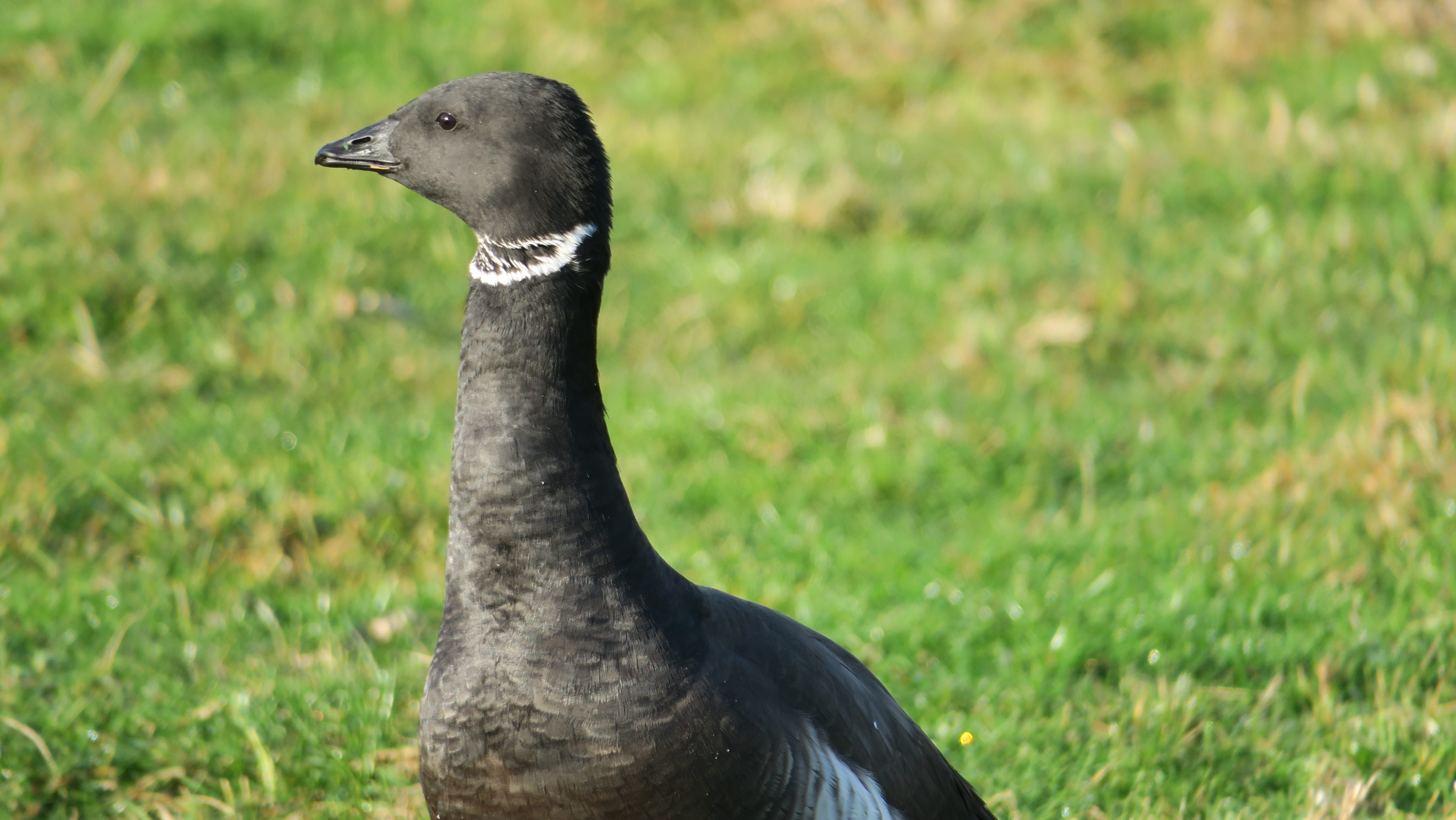
At MLK Jr. Regional Shoreline, I saw 42 (!!!) different bird species, getting me to 54 Big Day birds. The highlight obviously was Brant, and the 2 N2MBs I saw–a Long-billed Dowitcher and a Short-billed Gull.
Hayward Regional Shoreline
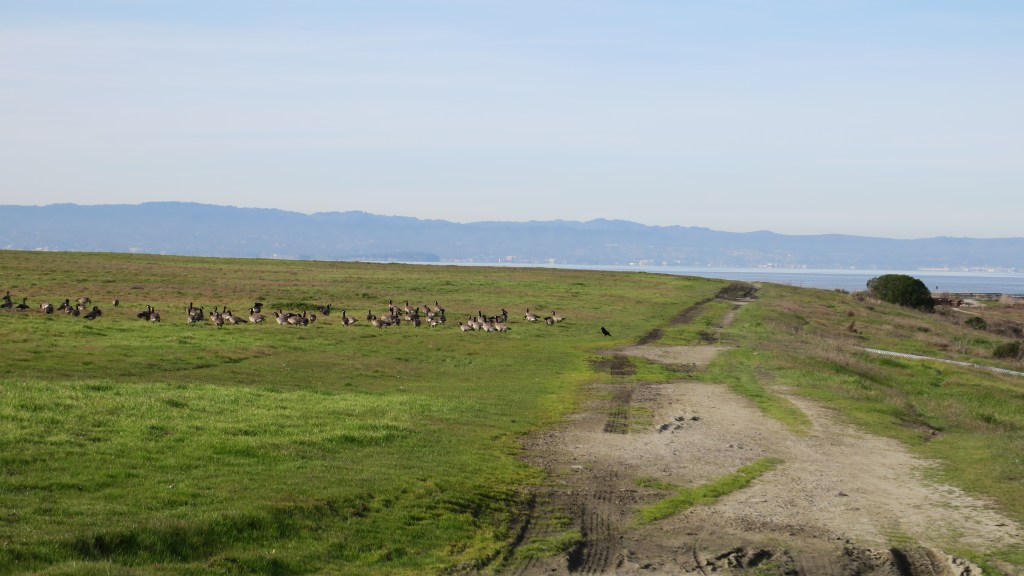
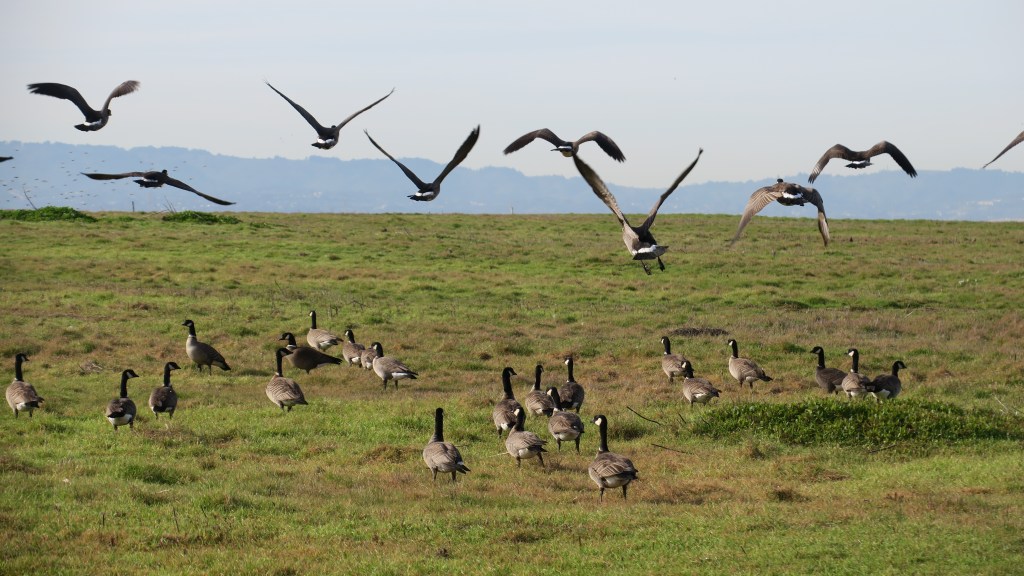
Next up was my first Bay Area birding digs when I moved here, Hayward Regional Shoreline. This area consists of over 1,700 acres of salt, fresh, and brackish water marshes, seasonal wetlands, and public trails, and is the top eBird hotpot in Alameda County, boasting an incredible 312 species seen. I typically start at the parking lot at the entrance, head to the water, and take a right turn until I am too tired to continue. Today, however, when I arrived around 10 am, the area was seemingly dead and birdless (emphasis on “seemingly”). I panicked and decided I wouldn’t take the entire trail so I could save time and head to another area. At the trailhead, where there typically is a large flock of Canada Geese, there was instead a huge flock of Cackling Geese (I estimated around 200). Their call was ADORABLE! I recommend listening online, or, better yet, in person at Hayward.
Although the area was seemingly deserted and sans bird (I was here exactly at high tide), upon closer inspection with binoculars, I found many birds, mostly asleep on water’s edge or out in the water (cute!!).
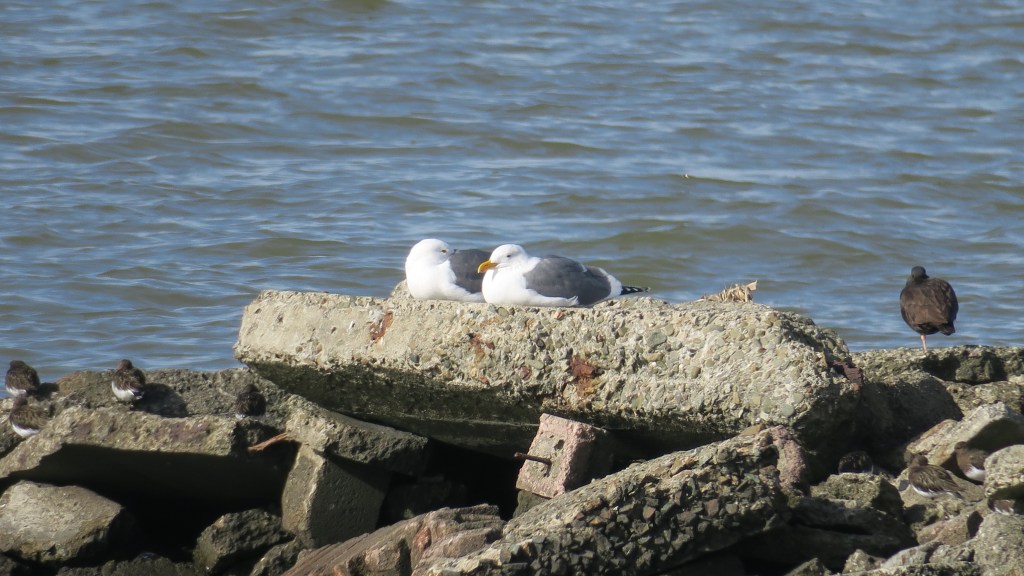
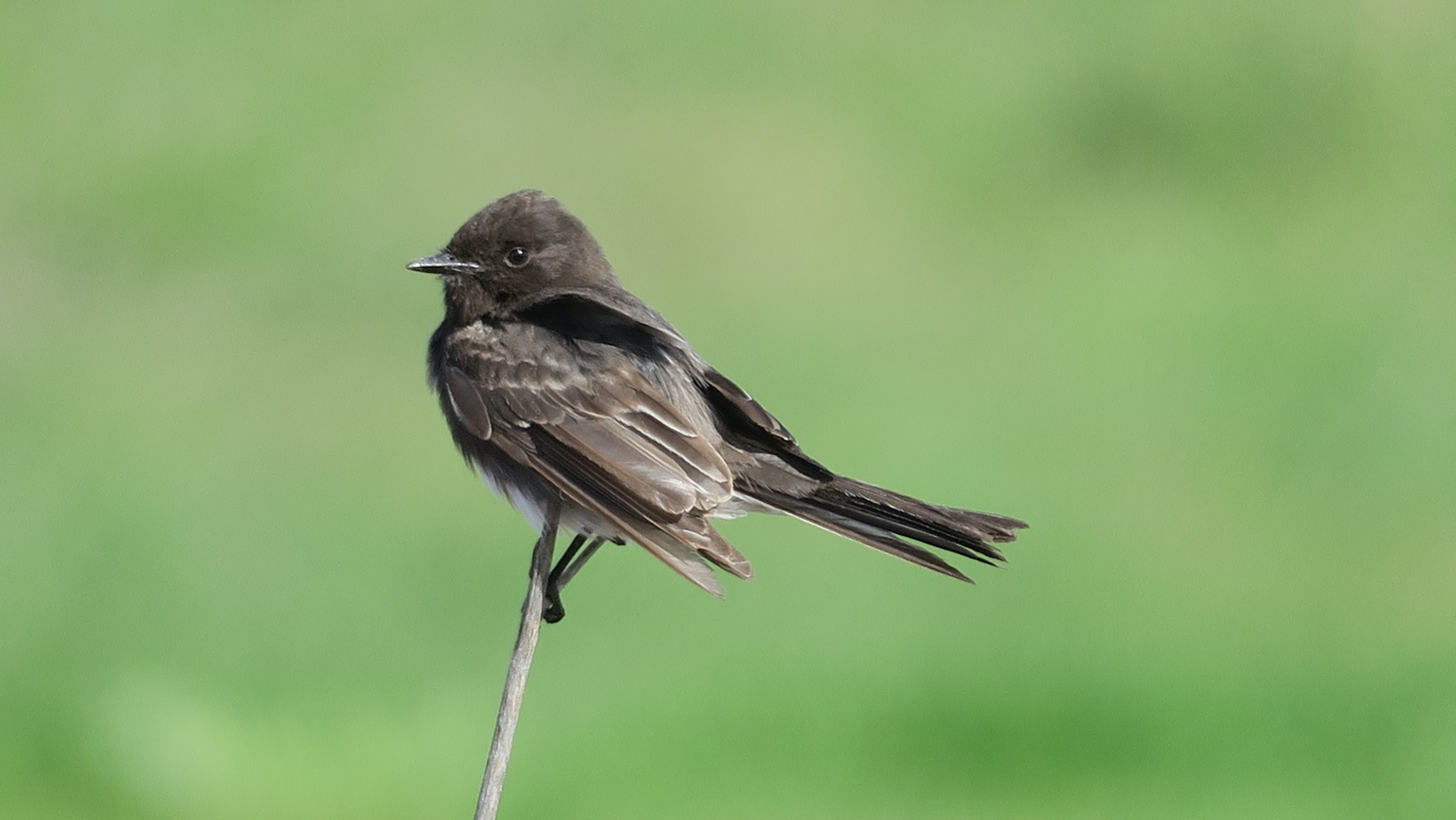
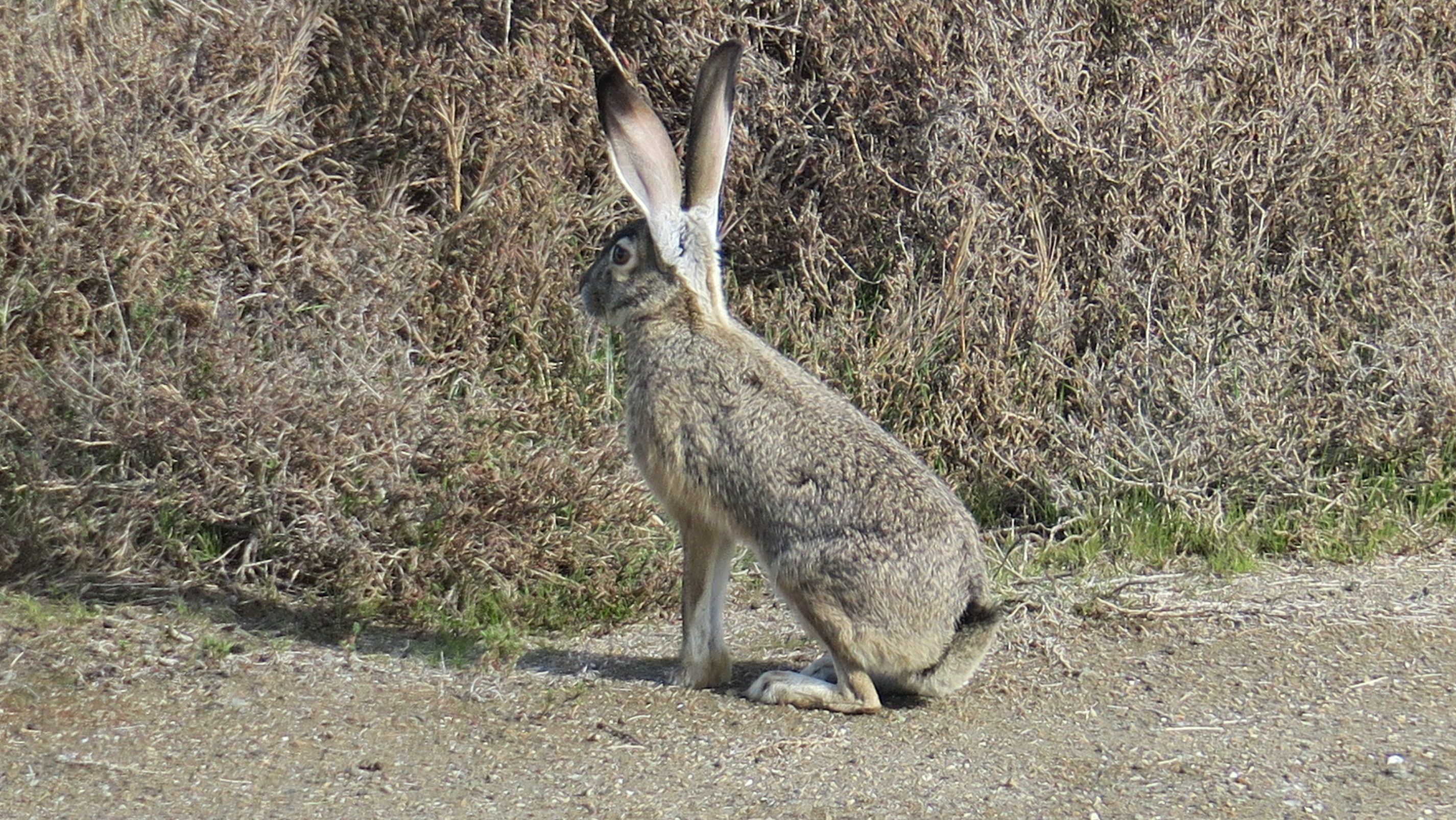
Here, I saw 24 birds, bringing my Bird Day total to 65. The highlights were the Cackling Geese and the Black Oystercatcher, one of my favorite birds.
Next, I was supposed to go to the San Leandro Marina but I was exhausted and starving. I checked the eBird list there and concluded that because of the time of day I likely wouldn’t see any new birds that I wouldn’t also see at the Berkeley Marina. I’m not sure this was the correct decision, but I got Taco Bell as a break, and decided to do a quick stop at Lake Merritt before taking a nap.
Lake Merritt
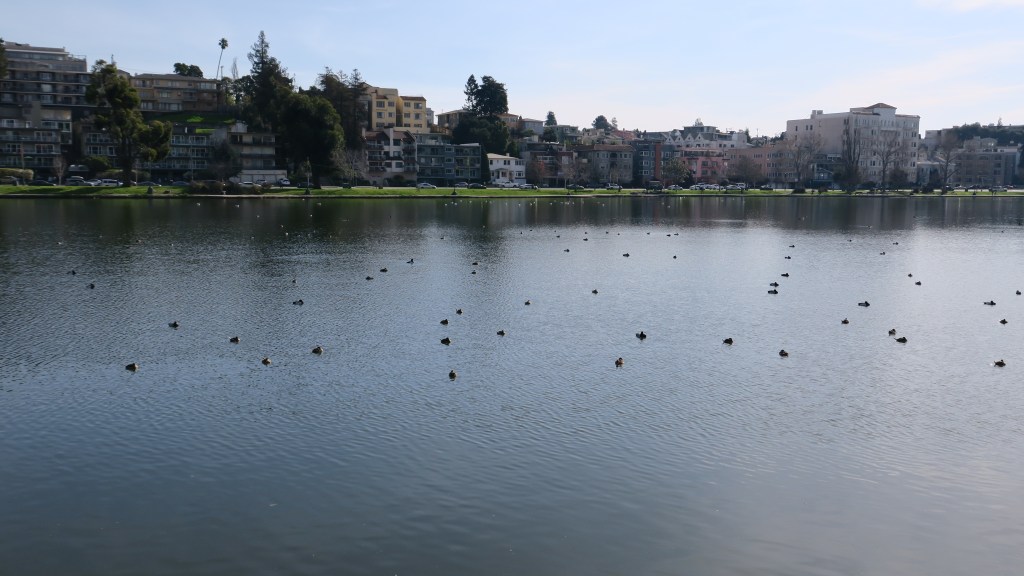
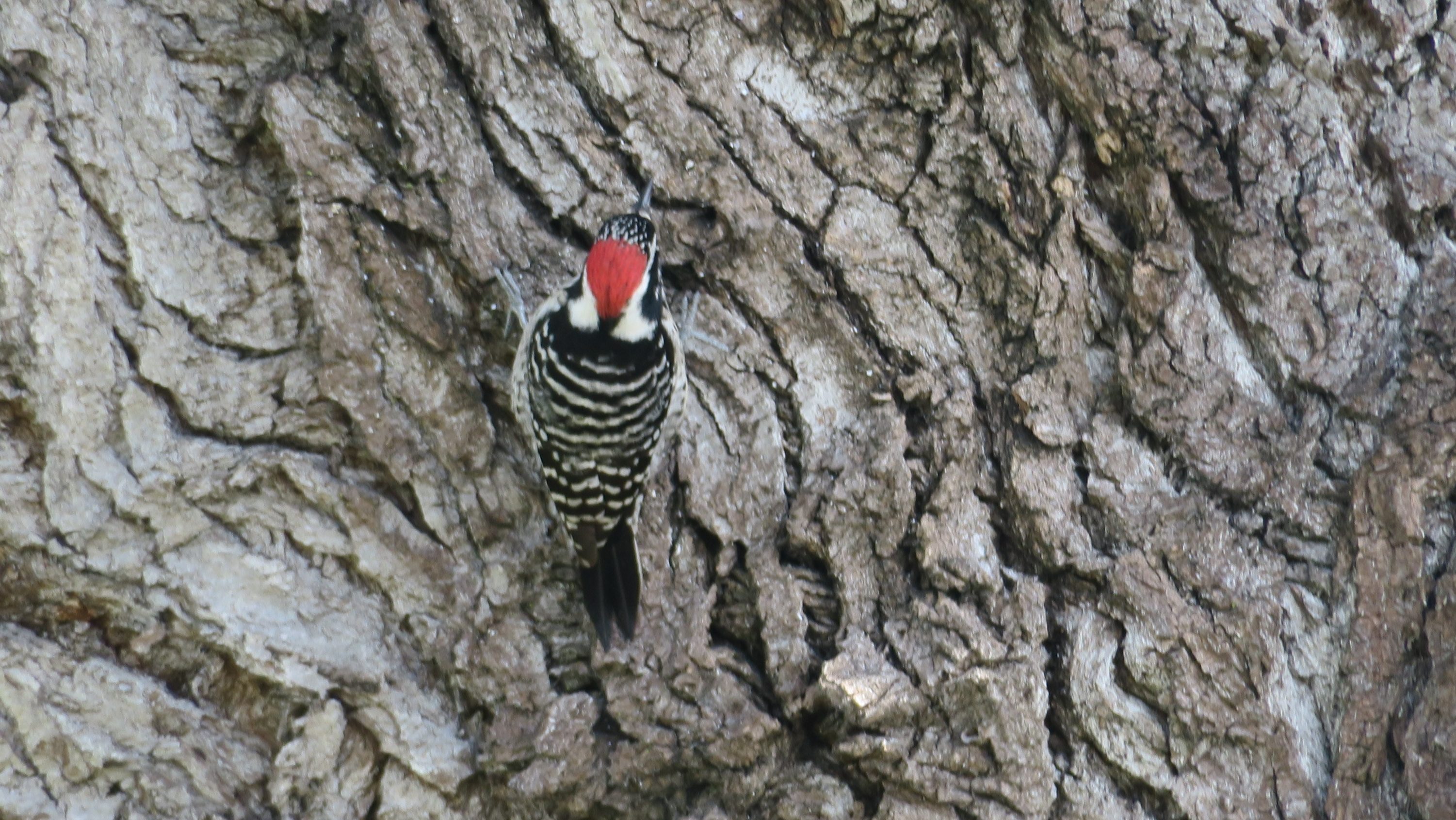
Lake Merritt is one of my favorite spots in Oakland. I spend a lot of time here walking, birding, and skating. It’s a tidal lagoon and is the US’s first wildlife preserve–pretty amazing! It’s def the best spot I’ve been to for urban birding and is extra special to me because I saw my first Barn Owl here while roller-skating. Birding here was a big lesson in embracing cringe. People audibly made fun of me (I was wearing my stupid binoc/camera harness and I fully deserved it), but I decided to just lean in, as painful as it was. It paid off because I saw a lot of birds here and it massively upped my Big Day Total! There were tons of water birds here, which I was expecting. What I was not expecting, however, was seeing Tiny Birds in the trees. Thrillingly, I saw two N2MBs, including a Nuttall’s Woodpecker. This was cool because they basically only live in California!
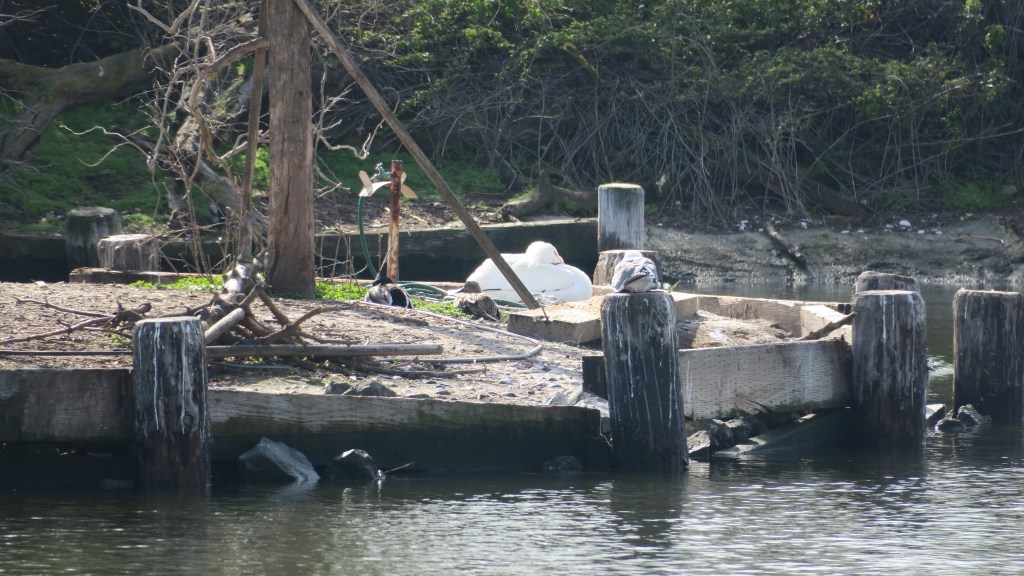
One of the reasons I wanted to come to Lake Merritt was that here you can reliably, year round, spot an American White Pelican, Hank. Hank has a wing injury that prevents him from travelling with the rest of the American White Pelicans who arrive in the fall. He was brought to Lake Merritt from Oregon to join two other permanent AWP residents, Helen and Hector, who passed away in the late 90s at nearly 30 years old each. Hank enjoys a celebrity status and a relaxing life at Lake Merritt.
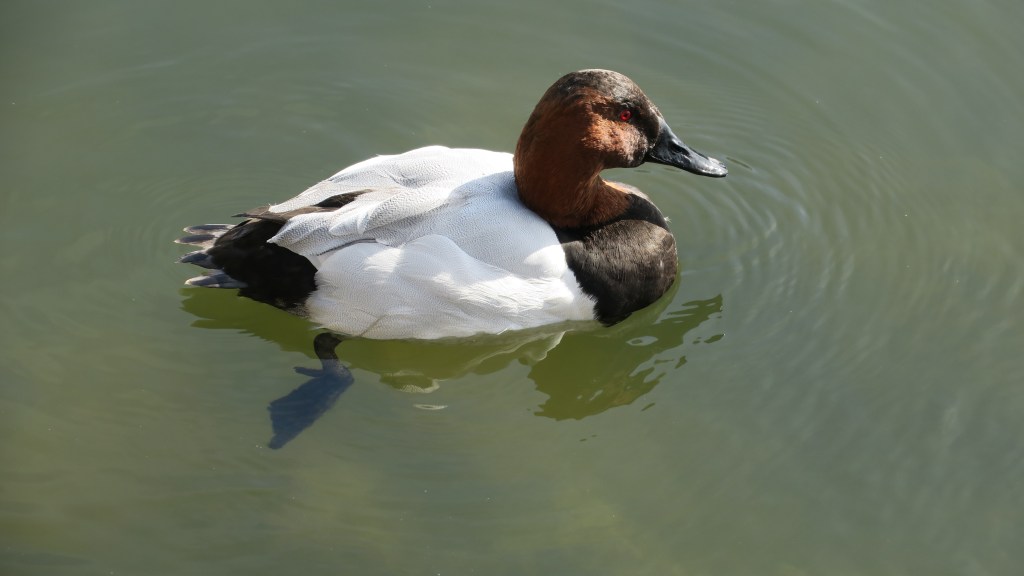
At Lake Merritt, I saw 26 species, bringing my Big Day total to 73. My highlights were the Nuttall’s Woodpecker and the Oak Titmouse, two California classics which were N2MBs!
Next, I took a disorienting hour long nap before heading back out. At this point I had walked for about 7 miles over 6 hours of birding and it was 12:30pm.
Albany Bulb
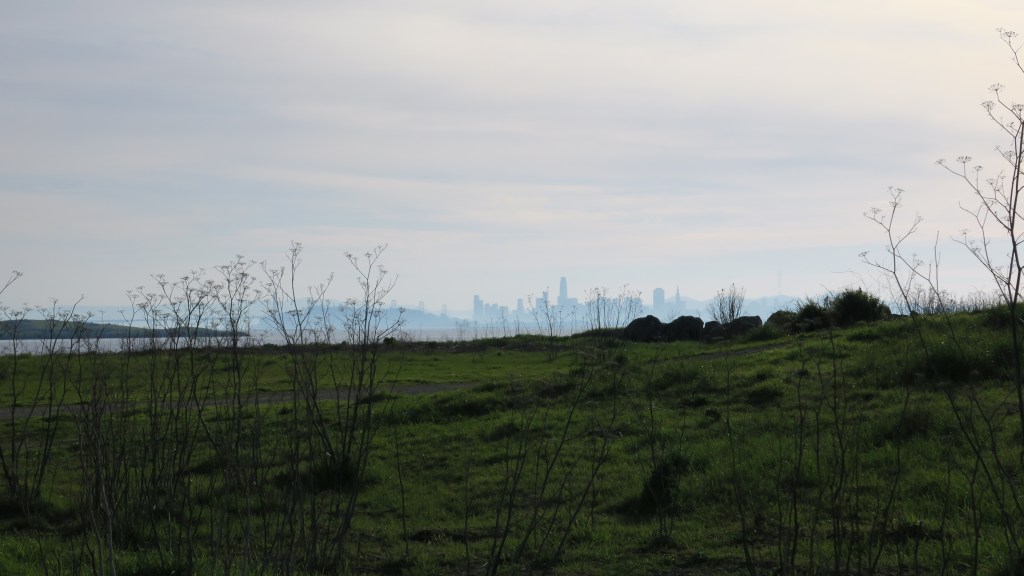
After my nap, I headed north to Albany Bulb. It is a former landfill-turned-park that is a peninsula into the SF Bay. It features some fun sculpture art and is one of several locations I visited today with a Burrowing Owl habitat. I immediately headed to the Burrowing Owl habitat and pet some cute dogs. The dogs’ owner asked if I was birding and we struck up a conversation. I asked her if she had seen a Burrowing Owl here and she told me that there is one reliably-seen year round resident at Point Isabel, a place not at all on my list. I immediately added it as my next stop. I spent around 30 minutes at Albany Bulb, and am glad I did. It’s a beautiful park and, if you have the time, you can walk between Albany Bulb, Point Isabel, and the Berkeley Marina/Cesar Chavez Park. Because I was running low on daylight, I did not spend a lot of time here.
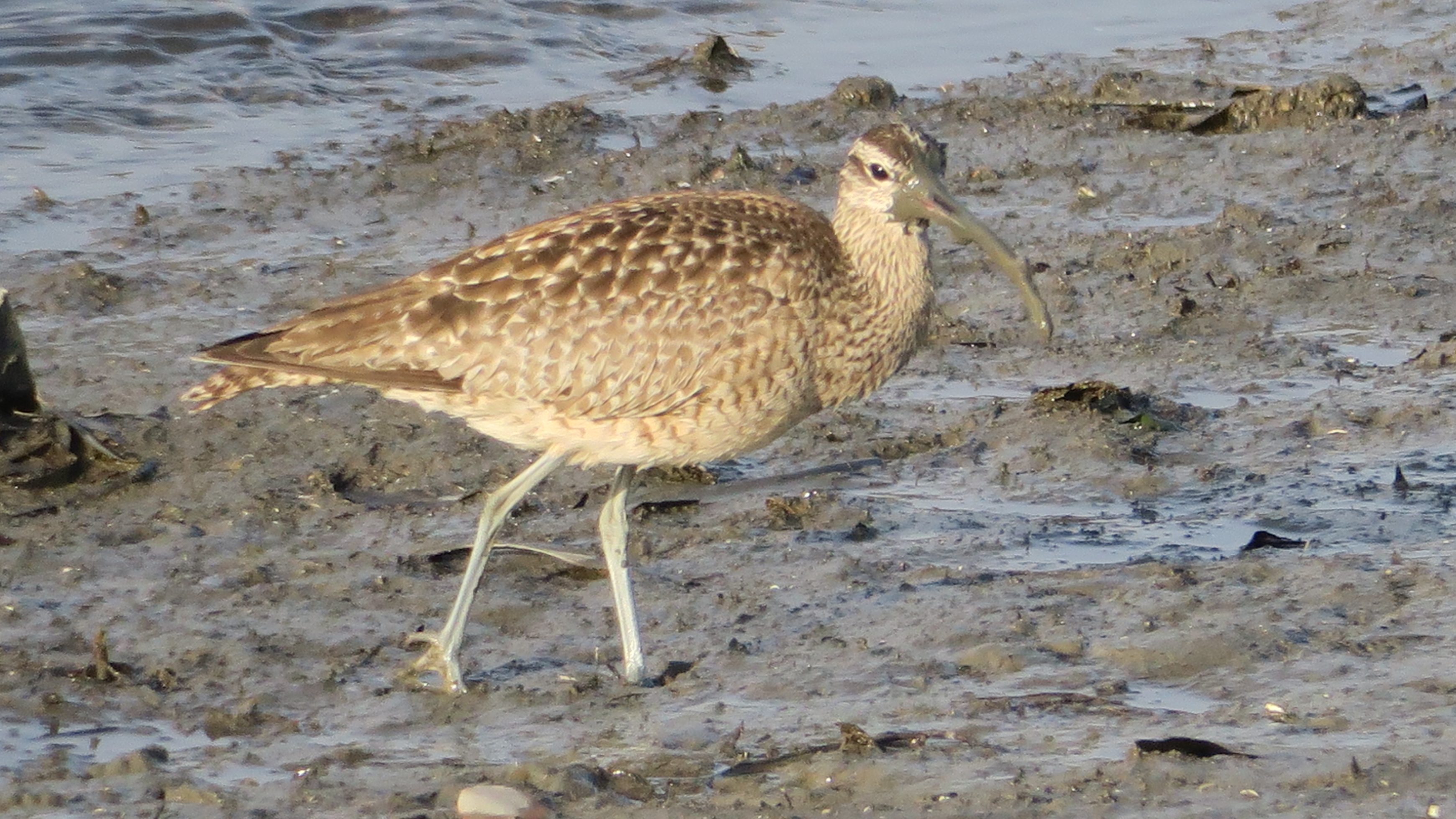
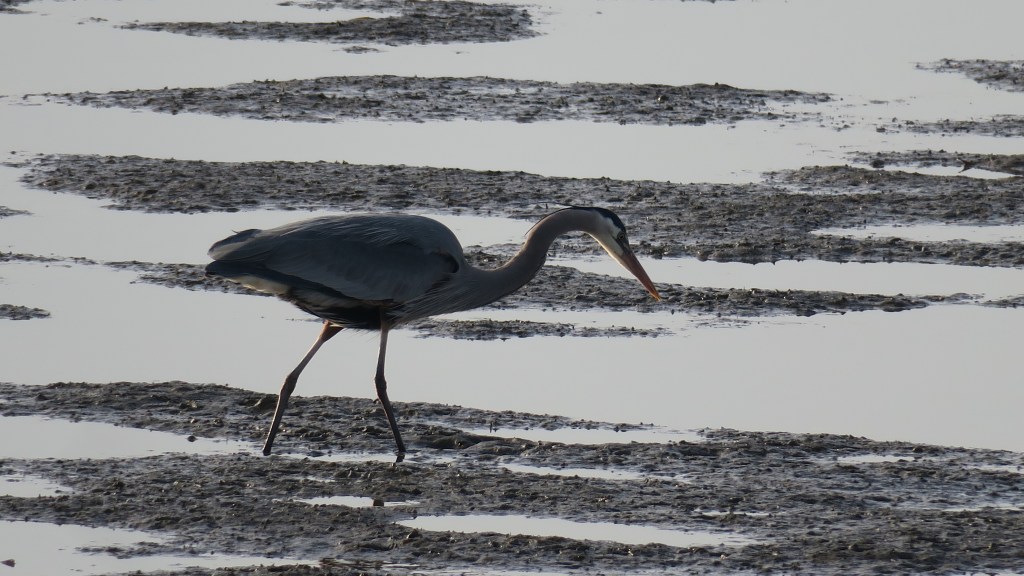
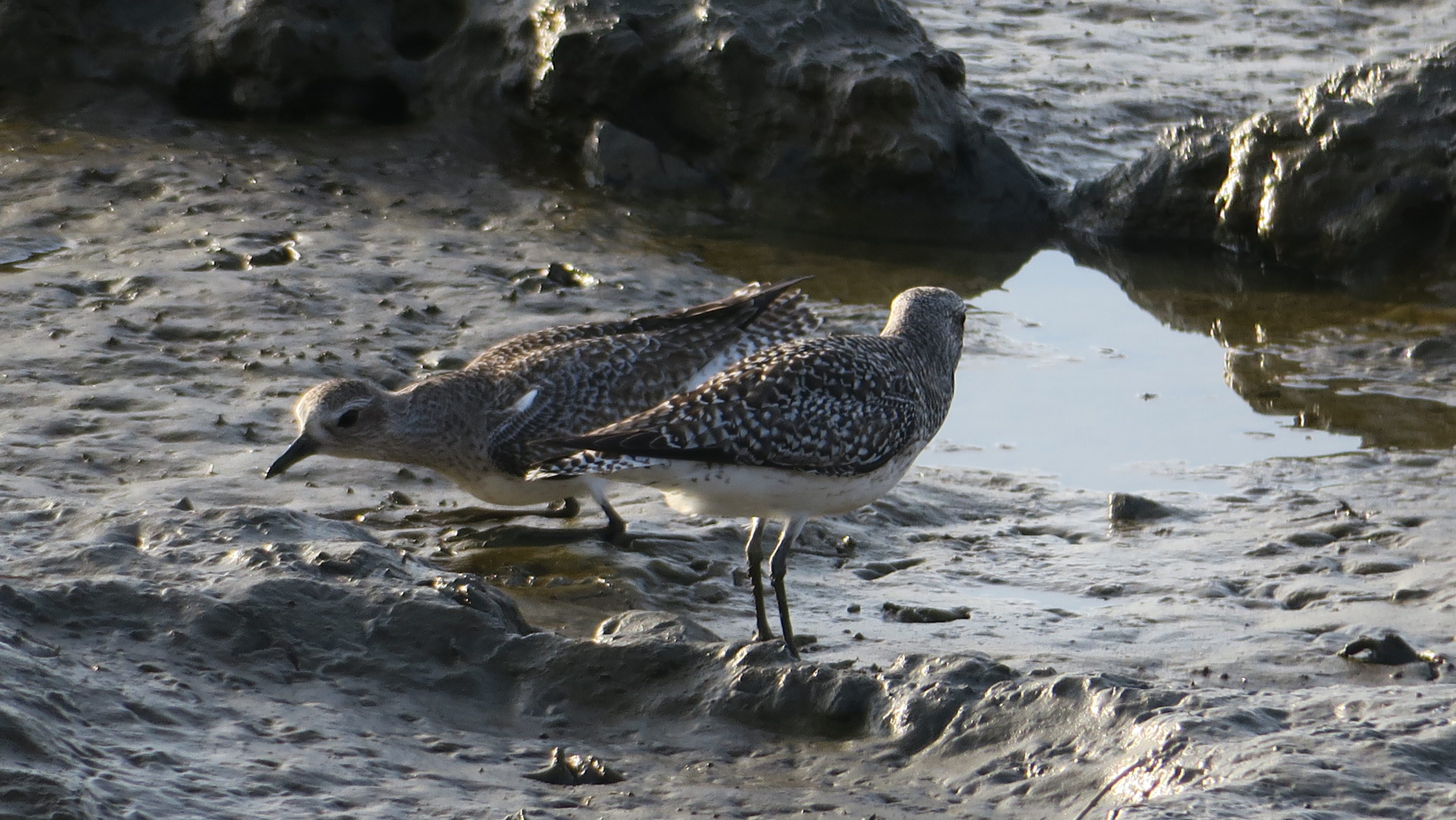
I saw some very adorable Black-bellied Plovers, one spreading its tail in a fan. I got this bad pic at the end of this display. I’m not sure what this behavior is about, and extensive googling has pointed me to their Birds of the World page, which is behind a paywall I cannot afford 😦 . Update to come once I’m more employed!
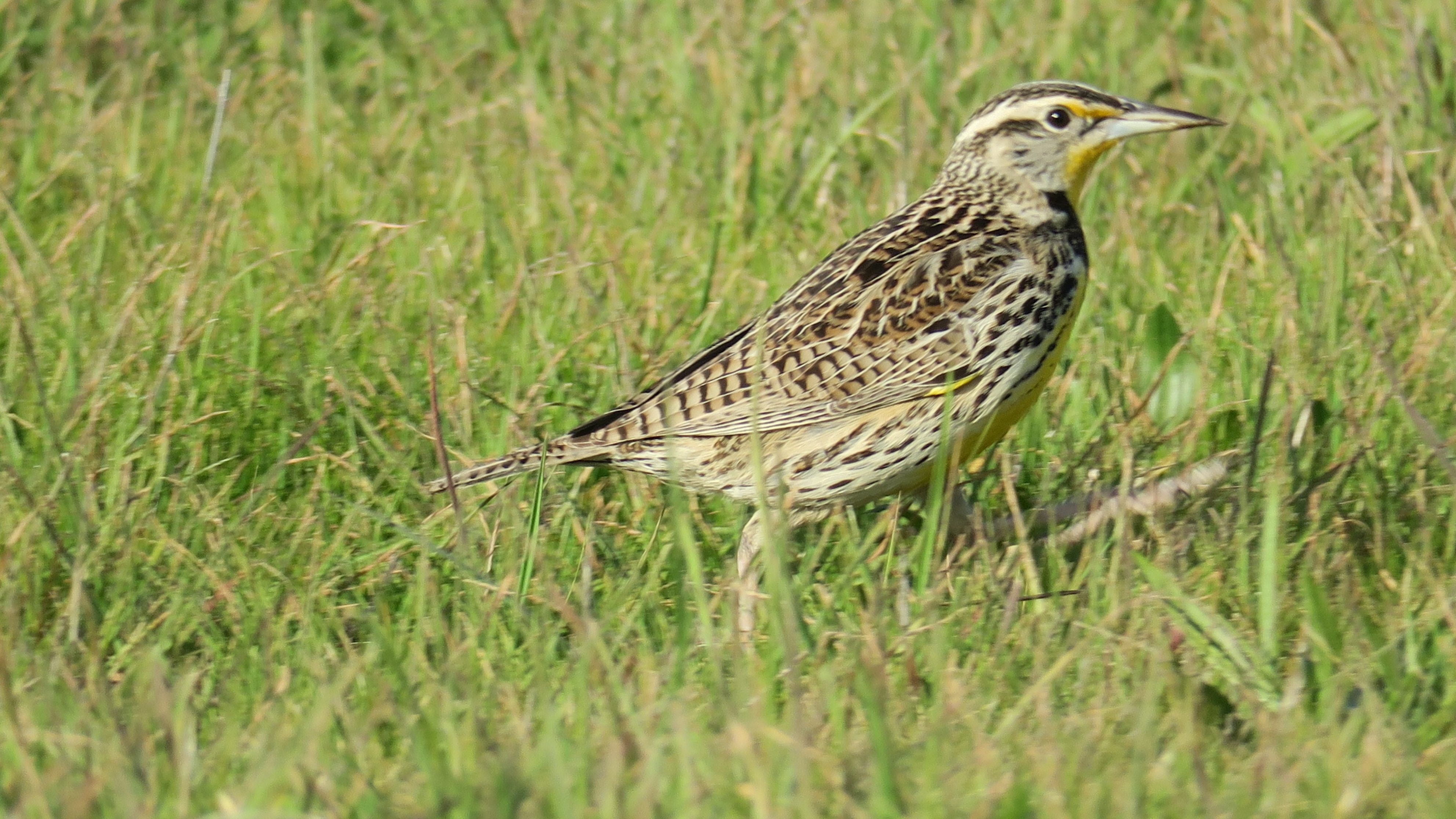
At Albany Bulb, I saw 16 species, bringing my Big Day total to 77. The highlights were this Plover display and some adorable Western Meadowlarks.
Point Isabel
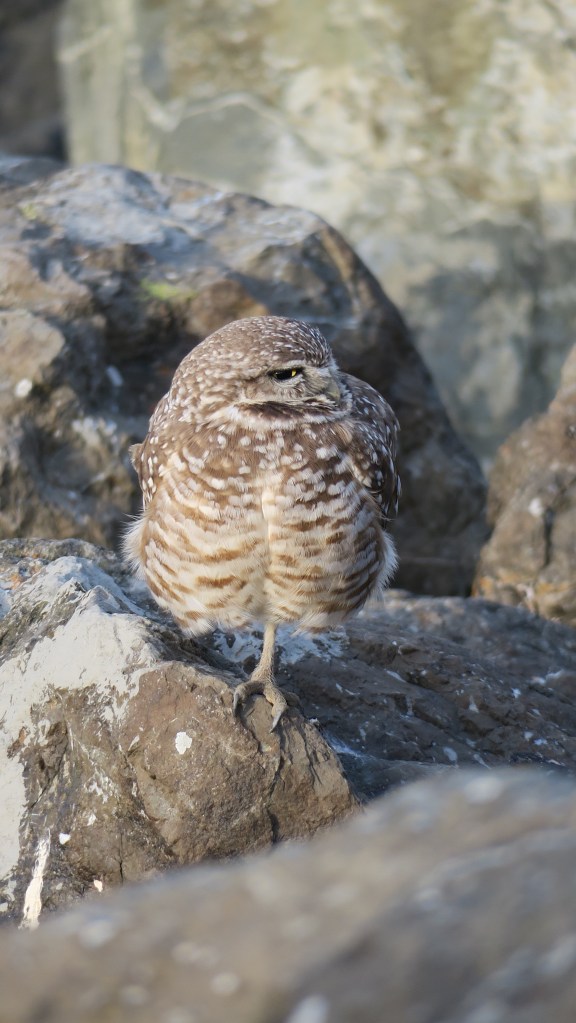
I’m going to start off with the bad news: I learned after this stop that Point Isabel is technically in Contra Costa county. It is directly on the border. For that reason, I have decided to not accept this fact, and the birds here count towards my Alameda Big Day total. Please do not call the bird cops on me for this one. Although I saw many birds here, I only took pictures of one: THE BURROWING OWL!!! This particular owl is apparently here almost 24/7, just off of the dog park. If interested, I can give you specific directions, but I will not post it here because I don’t dox owls on this page, sorry. Burrowing Owls live literally underground in holes that they either dig or take over from other burrowing animals. If that doesn’t knock your socks off, you can fuck right off. They are a victim of human greed and expansion; once plentiful in the Bay Area, they are now listed as a species of concern here. In a conservation effort, several parks in the Bay Area now have designated safe spots for them. There are conservation programs that I plan on volunteering for when they begin in March! Here is some great info about them from the Audubon chapter. You can help Bay Area Burrowing Owls by always keeping your dog on leash in their designated areas and parks, and encouraging others to do the same.
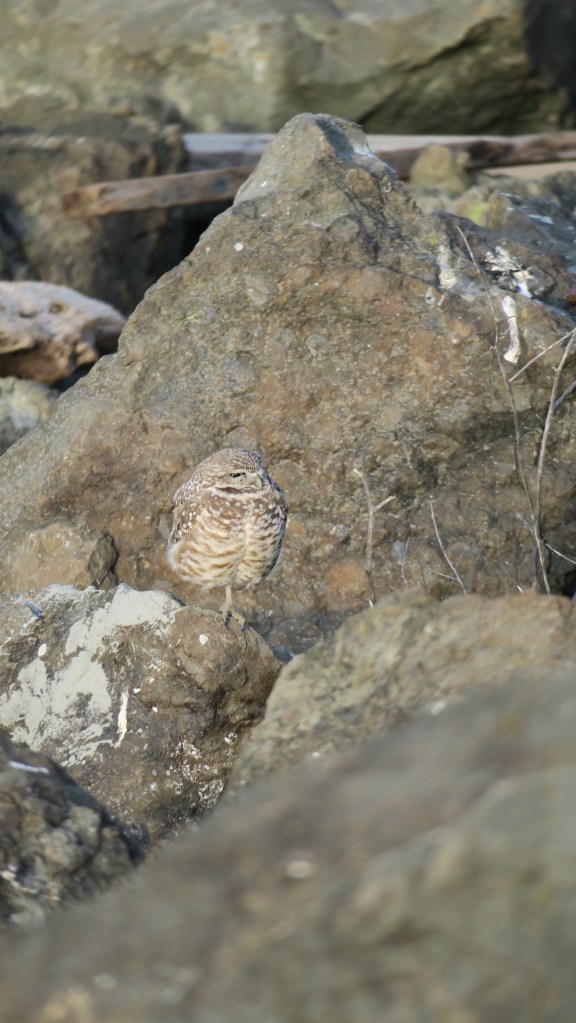
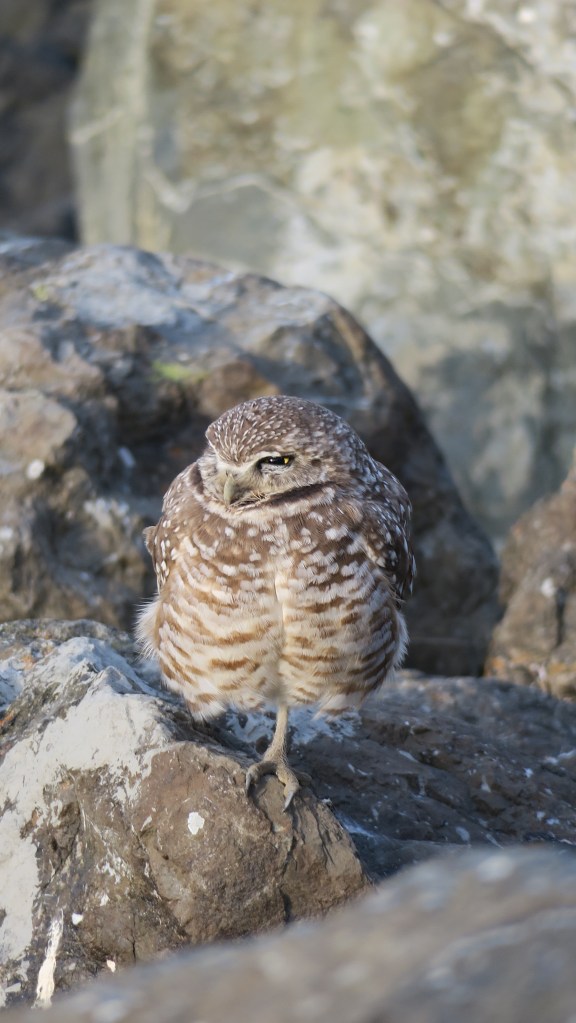
I saw 22 species here, bringing my Big Day total to 82. I saw one N2MB, fucking obviously, the Burrowing Owl! This was not just the highlight here, but the highlight of the entire day!
Cesar Chavez Park
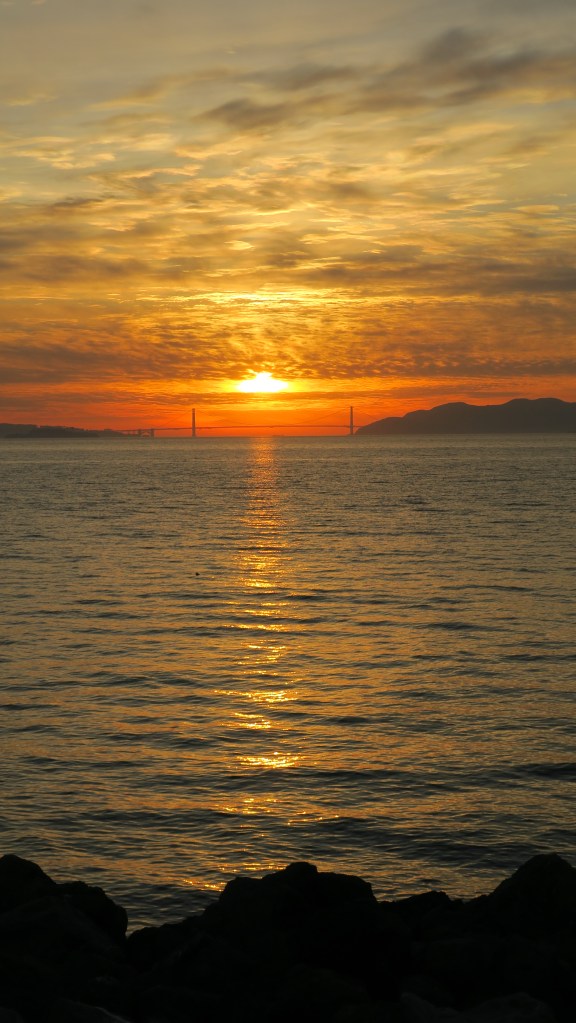
My last spot of the day was Cesar Chavez Park, a part of the Berkeley Marina area. Because I got here pretty late (around 5, only 30 min before sunset), I probably missed out on some bird sightings. At this point, a friend met up with me and we just enjoyed the beautiful park! The only possible new Big Day bird was this mystery hawk, whose identity I am still trying to solve. Please let me know if you have any leads.
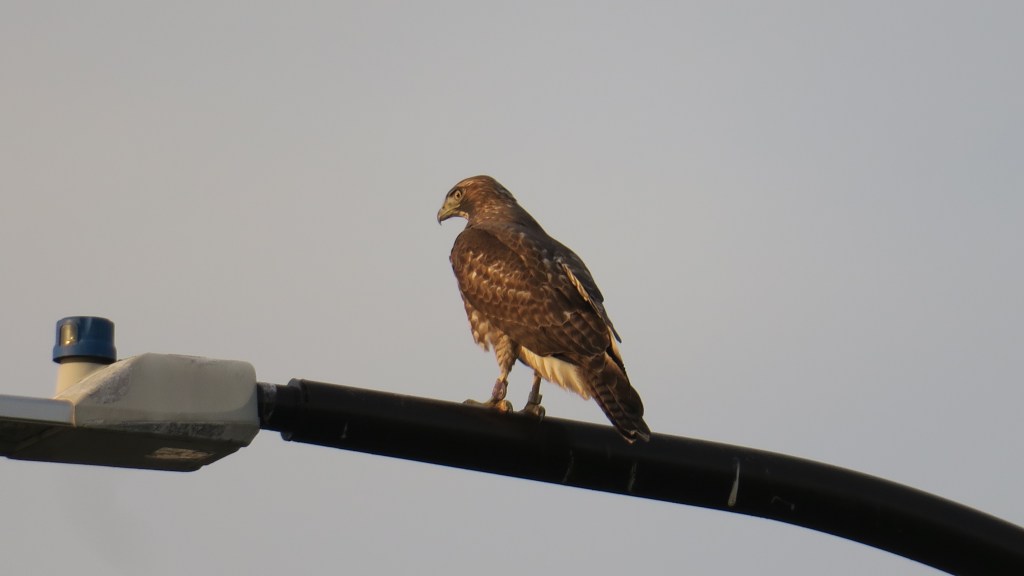
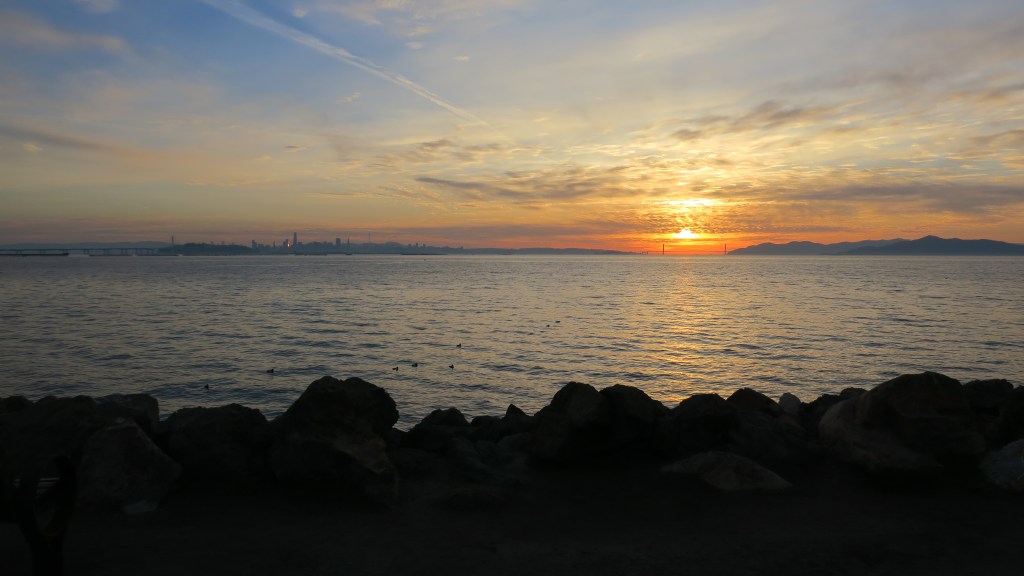
At this final stop, I saw 13 species. Because I’m not posi on this hawk ID, I’m concluding my Big Day count at 82 birds. My highlight here was the beautiful sunset. 🙂
What I Learned
Over the course of my Big Day, I learned several important lessons that I plan on carrying on into my normal birding and my next Big Day.
- Start realllllly early: I decided to start about 30 min before sunrise, thinking before then would be dead. This was wrong. By the time I arrived at my first location, the sun was already coming up and birds were going totally insane singing. I think the first hour before sunrise AT LEAST would probably be ideal, especially in my ongoing Owl Quest. Next time I go AM birding, I plan to head out well before sunrise.
- Don’t waste time walking: This pains me to say because it illustrates that much of a Big Day is about the game and not love of the outdoors, but in order to see as many birds as possible, unfortunately, spending time walking can really cut into bird-seeing time. At MLK, I should probably have parked and walked out from 3 parking lots instead of walking for around an hour. This tip only applies to a Big Day by car, however.
- Practice birdsong, gull, sparrow, and shorebird ID: These are all my weakest points in bird ID. I plan on reading some books, listening to some tunes, and maybe taking a class or two through Cornell’s website or my Audubon chapter.
- Tides are massively important: That is self explanatory.
- No time is dead time: Even during bird siesta time, I was able to see many birds, especially ones exhibiting fun behavior like sleeping. My next Big Day, I plan to stay out the entire day, without stopping for a nap.
I am proud of my 82 birds and my 13 miles walked! The number is much higher than expected, and I added 6 N2MBs to my life list, bringing it to 373. Here is my trip report on eBird, where you can see all the details of my Big Day. To give my number some context, the Alameda County Big Day record is 172 (not sure who set this, but I read about it in Oliver James’ fantastic book, Birds of Berkeley).
All in all, I loved doing my first Big Day and hope to do more in the future. The next one I am thinking about is a SF County Big Day using only public transit and walking. May 14 is International Big Day Day (?idk), so I will def be doing another then, if not sooner! I learned so much and feel so much more confident in my bird IDing skills after this experience. If you made it to the end of all of this, thank you!! I don’t blame you if you didn’t!


Leave a Reply